Slopocalypse: Gen Z’s Eye-Roll at AI-Generated Everything
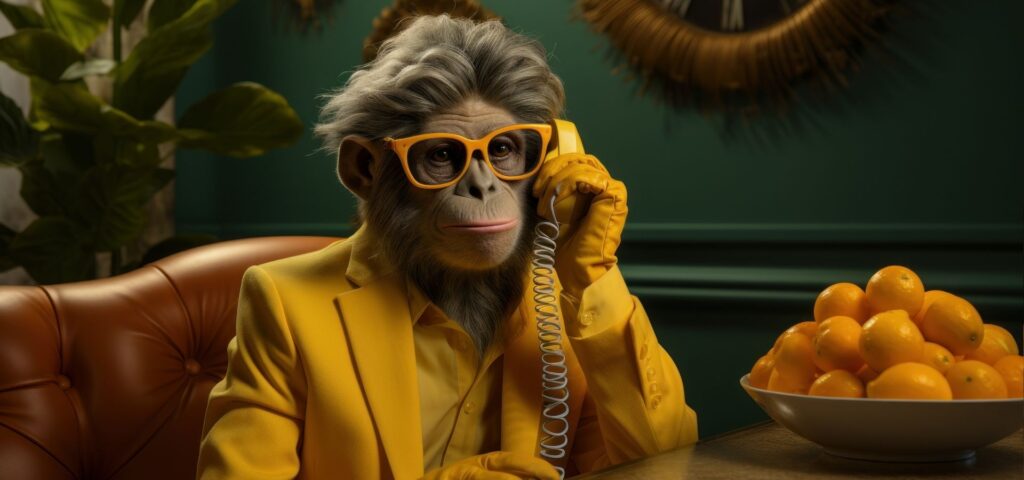
If your timeline has started to feel like déjà vu dressed in different fonts, congratulations — you’ve met the newest villain in India’s digital culture: AI slop. It’s the term young Indians now use for content that is technically perfect, algorithmically optimised, and emotionally just hollow. The kind of content that sounds like a very polite machine trying to impersonate a human who hasn’t slept after a couple of nights of partying and has to deliver content on a deadline. Slop is what happens when content looks perfect but feels pointless. It’s that too-smooth video or that surreal video of a monkey who talks like a human. The creator who started showing videos of a monkey talking like humans in places of significance like the Kumbh Mela, Ghats of Kaashi, and more. Captures attention for some time and then loses steam. It’s that caption that sounds vaguely motivational but says nothing, that article that’s technically right but emotionally flat with content that is completely generic and AI generated. And Gen Z? They’re calling it out with the precision of people who’ve grown up around enough noise to instantly recognise when something has nothing to say.. Every Post, Same Energy A 22-year-old in Pune told us during a digital ethnography session, “Everything online now feels like it’s written by the same person – someone who just discovered AI.” Another in Mumbai told us snarkily, “It’s like every post went to the same IIT-JEE coaching class.” Different creators. Different brands. Different industries.Same tone, same rhythm, same “engagement-friendly” lines. If the internet once felt like a crowded bazaar with something new to discover all the time, it now feels like a coaching-class corridor where everyone is memorising the same answer sheet. This sameness is what young people are rebelling against. Because for them, creativity isn’t just about getting it right. It’s about getting it real. How Efficiency is eating Originality and Real connection: As researchers, we’ve seen tech-driven creativity cycles before. But generative AI is different — not because of its capability, but because of its speed. You can now create a blog in minutes, rewrite a script in seconds, and refine tone until it sounds “perfect.” Except that perfection is a big part of the problem. The result? A wave of content that looks fine, reads fine, but feels anything but fine.One might think Gen Z doesn’t mind automation — after all, they use AI tools constantly. But they are also fine tuning their authenticity radar. They can sense when something has been over-engineered. They can tell when a reel, post, or blog has been written to perform, not connect. A 20-year-old design student told us during a study “I can’t always tell when something’s been written by AI. But most often you know if it’s trying too hard it is AI.” Efficiency in wonderful, but only to a point. When everything is over-optimised, it loses texture — the very thing that makes communication feel human. For them, AI slop isn’t just bad content. It’s a signal that the content creator does not care anymore. The Indian Context: Same Script, New Scene What makes this especially interesting in India is our instinct for jugaad — our cultural comfort with shortcuts. We’ve always loved finding faster, cheaper, more efficient ways to do things. AI fits that instinct beautifully. But where we once used jugaad to create something clever, we’re now using it to create more of the same. Every café caption, every travel vlog, every brand voice sounds suspiciously identical — smooth, polite and maybe personality-free. We’re not just automating writing; we’re automating tone and personality. A 19-year-old communications student in Delhi put it perfectly: “It’s like everyone’s reading from the same script — and both the plot, the style are predictable.” What This Means for Brands and Researchers As a researcher, this shift is fascinating because “slop” isn’t just a content trend — it’s an attitude marker. It tells us that young Indians are no longer dazzled only by polish; they’re looking for texture. They’ll forgive a typo ( they don’t really care for it anyway) if it feels honest. They’ll skip a brand that has no distinct personality. For brands and creators, that means: Stop optimising for output. Optimise for voice. Mix the human and the machine intentionally. AI can draft, but humans must edit for meaning, nuance, and tone. Build personality. A strong, distinct voice is the new signal of credibility. Study reactions, not reach. The best insights come from understanding why audiences dismiss something as slop. AI Isn’t the Villain — Indifference Is To be fair, AI itself isn’t the problem. It’s what happens when we stop showing up creatively because the machine can do it faster. AI can’t be blamed for the sameness — that’s on us. When everyone uses the same prompts, the same tone, the same structures, the outcome was inevitable: a content monoculture. But there’s a flip side.If used consciously, AI can amplify distinctiveness. It can give creators more time to think, not less. It can help researchers dig deeper into patterns, not drown in surface-level chatter. The Slopocalypse Is the Wake-Up Call So maybe the rise of “AI slop” isn’t a crisis — it’s a mirror.It’s showing us what happens when we trade curiosity and creativity for convenience. Young India has already noticed.They’re calling it out, scrolling past it, and rewarding the few creators and brands who still sound unmistakably themselves. For those of us who study consumers, this is an opportunity — to track not just how people use AI, but how they feel about it. To explore how authenticity is being redefined in a world where originality can be mass-produced. Because at the end of the day, AI can imitate emotion. But only humans can mean it. And that — more than ever — is what Gen Z and Gen Alpha are telling us.
Commute Could Be the Next Big Space

With populations and vehicle ownership exploding, on average, travellers in Delhi, Mumbai, Bengaluru, and Kolkata spend 1.5 hours more on their daily commutes than their counterparts in other Asian cities during peak traffic times (Unlocking Cities, BCG, April 2018). India’s transportation sector is at the cusp of a major transformation, thanks to Mobility-as-a-Service (MaaS). Once limited to ride-hailing apps, the ecosystem has now evolved into an integrated digital platform that brings together cars, public transit, taxis, bike sharing, ride-sharing, and even EV rentals. The result? A mobility experience that is reshaping how urban India moves. Market Growth at a Glance The numbers speak for themselves: Market Size in 2024: USD 4.7 Billion Projected Market Size by 2033: USD 87.7 Billion CAGR (2025–2033): 35.6% That’s an 18X growth in less than a decade, driven by the rising demand for integrated, convenient transport solutions. While Mobility is fast becoming a lifestyle necessity, yet it simultaneously presents a growing tension for urban commuters today.The growing popularity of services like Ola, Uber – their sharing and premium membership models reveals the consumers’ need to delegate not just the effort of movement, but respond to the consequences of being on-the-move in various ways, with every stray second lost is spent counting lost change. From providing in-car entertainment to access to WiFi to ease connectivity hurdles during travel, short-term travel between work and home has also dynamised as mini-vacations, an evolving zone of transit and social interaction. MyHQ, a coworking start-up based out of New Delhi has started ‘The myHQ Coworking coach’ that runs as the last coach on Delhi Metro Yellow line. The 50 seater co-working coach comes with free reliable wifi connection, ample plug points, complimentary beverages as well as quick, accessible stationery and printing facilities. There are comfortable laptop-friendly desks created on every coach to allow a seamless work experience. According to the myHQ blog, their main idea was ‘to make the lives of millennial workers much more productive and connected in this globally advanced era.’ (‘Take work-on-the-go to an unimaginable next level with myHQ coworking coach in Delhi Metro. Reserve your seats and enjoy the best of work amenities on your next metro journey.’ – My HQ website Our contemporary systems of commute have started to evolve very organically to service various lifestyle and societal needs. Take for instance, shared cabs, uber ears, ola play, integration of autos, and even motorcycles – goes to show how the entire ecosystem is living a synergised experience of optimising time, value and space in multiple permutations and combinations. Ride-hailing app Ola has innovated on in-car customer engagement to offer a bouquet of personalized features for both customers and driver partners on Ola Play, its connected car platform available on Ola Prime. Ola Play now greets passengers on boarding, uses their first names and puts on their favourite on-the-go music based on previous data from previous rides. In fact, it can adjust the volume of music if the rider receives a call; making the commute a pleasant experience overall. Shared and pool cabs may soon become the most vibrant spaces for social spurt. Premium services are accounting for the need for personalisation. One end of the spectrum is sprucing up the commute itself, the other is optimising for wait time and spatial identity. Dating apps are catering to lonely travelers at airports, an app called btrfly offers air travellers the opportunity to connect in real life with like-minded people. The potential of commute time to bring together an innovative convergence of products, services and cultural codes is tremendous. This space is open for gamification designed to serve all manners of objectives. From incentivising environmentally-friendly behaviour, to promoting social exchange and networking, the next moves would stem from understanding what more can a space of transit stand to offer? Is there a way to integrate security, housekeeping and childcare services, or enhance social cause participation? With the potential of a smartphone, roping in future facing technologies, we may not be too far from visions manifest from Augmented Reality and AI in a hyperconnected framework.
Generations at War: A Field Study From the Indian Living Room
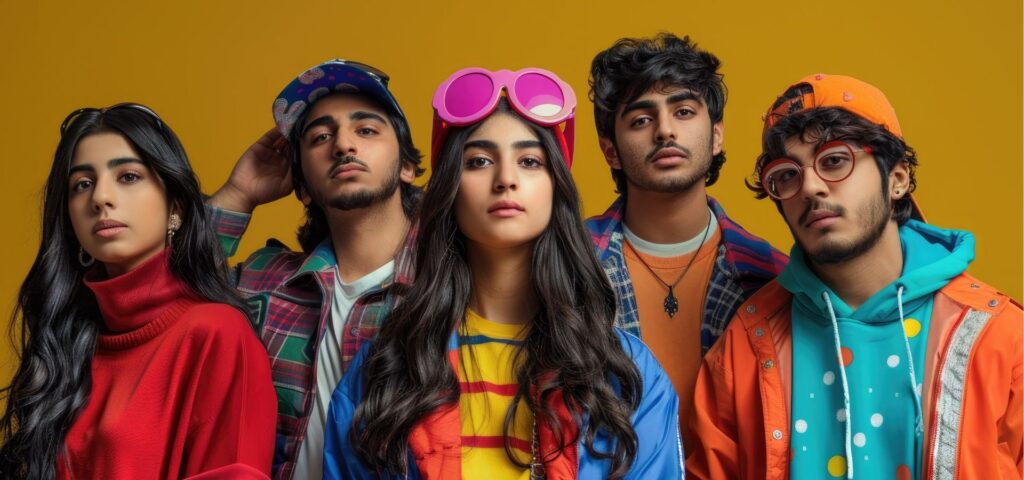
You know what Indian families are? They’re basically wildlife documentaries. Except instead of tigers fighting over territory, it’s Boomers, Millennials, and Gen Z fighting over the remote. David Attenborough should really narrate our family dinners. Different Species, Same Habitat Gen X / Boomers: Born in scarcity. These are the people who iron plastic bags because “kuch kaam aa jayega.” Their idea of happiness? Owning one Bajaj scooter and three suspiciously large steel almirahs. Millennials: Liberalisation kids. They saw cable TV, malls, and thought life was a Karan Johar movie. They invented EMIs and wanderlust. Their main life skill? Explaining to their parents why “going to Goa” is not a crime. Gen Z / Alpha: Digital natives. These are kids who don’t believe in jobs, only “passion.” Their dream? To be a “content creator.” Beta, what content? “I’ll review street food, Mumma.” Great. Please also review the electricity bill. Three species. One jungle. Of course, there’s conflict. Clash Point 1: Work Parents: “Why would you leave a stable job?” Millennial: “Because my boss is toxic.” Gen Z: “What’s a boss? I’m freelancing on Canva.” To Gen X, a job is survival. To Millennials, it’s LinkedIn clout. To Gen Z, it’s optional. No wonder half the fights in Indian homes start with “Beta, what do you do all day?” Clash Point 2: Money Gen X: “Save. Buy property. Gold is gold.” Millennials: “Invest. Mutual funds sahi hai.” Gen Z: “Manifest. The universe will provide.” Meanwhile, the only universal truth? Nobody wants to pay the electricity bill. Clash Point 3: Marriage Boomers: “Shaadi is duty.” Millennials: “Shaadi after promotion.” Gen Z: “Shaadi? LOL. Let’s just vibe.” And this is why every Indian wedding has three kinds of people: Elders asking, “When will you have kids?” Cousins asking, “Is the bar free?” Gen Z asking, “Is there Wi-Fi?” Clash Point 4: Technology Parents: “Why are you always on your phone?” Kid: “Why are you always on my phone?” For elders, privacy means closing the curtains. For Gen Z, it means locking their Instagram stories from relatives. Same word, completely different trauma. The Emotional Core Let’s be honest — the fights aren’t about jobs, money, or shaadi. They’re about control. Parents: “We suffered, so you should too.” Kids: “You suffered so I wouldn’t have to.” Both sides think they’re doing the noble thing. Meanwhile, the Millennial in the middle is just Googling “cheapest therapy near me.” Why It Never Ends In the West, kids move out at 18. Fight solved. In India, kids live at home till 30… sometimes 40. Parents co-sign your loans. Grandparents raise your kids. Even the family WhatsApp group has four generations arguing about why nobody replied to “Good Morning.” So no, this isn’t going away. Generational conflict is India’s favourite reality show. Forget Bigg Boss. Just livestream one joint family dinner. Same drama, fewer Salman Khan monologues. The Punchline Generational clashes in India don’t end. They get inherited. Your dad fought with his dad about land. You fight with your dad about Netflix. Your kids will fight with you about AI parenting robots. The only thing everyone will always agree on? That the neighbour’s kid is doing better.
Empowered citizens,[br]crafting new terms – 3

“Unpac helped me understand exactly what my target audience craved. Their research was insightful and actionable. Gone are the days of guessing – Unpac gave me the data to win!” Arti Jog, Mumbai
Empowered citizens,[br]crafting new terms – 2

“Unpac helped me understand exactly what my target audience craved. Their research was insightful and actionable. Gone are the days of guessing – Unpac gave me the data to win!” Arti Jog, Mumbai
Empowered citizens,[br]crafting new terms

“Unpac helped me understand exactly what my target audience craved. Their research was insightful and actionable. Gone are the days of guessing – Unpac gave me the data to win!” Arti Jog, Mumbai